

Understanding EV, Hybrid & PHEV: A Buyer’s Guide for Los Angeles Shoppers
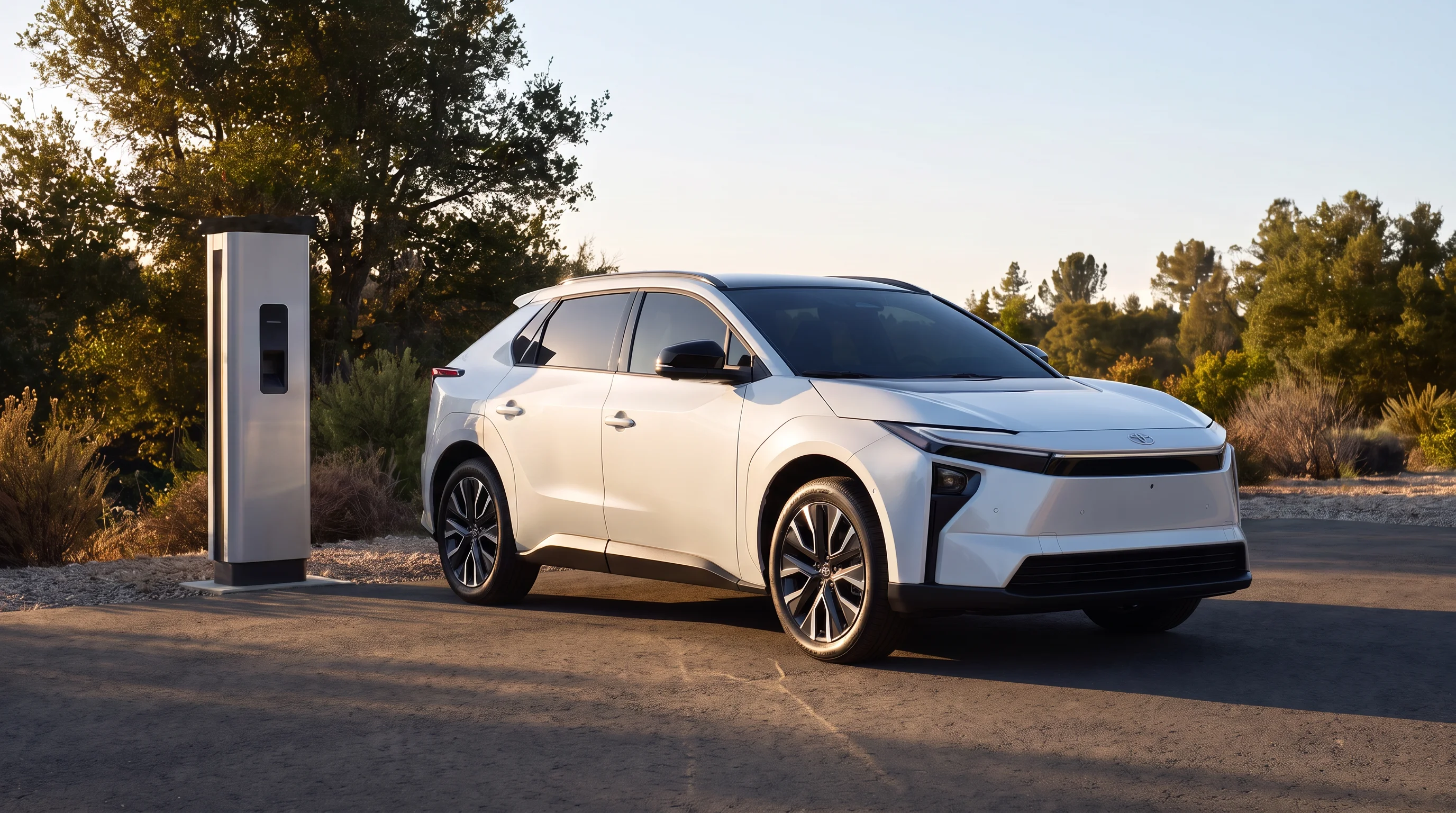
Choosing between a hybrid, a plug-in hybrid, and an all-electric vehicle comes down to three practical questions: where you park at night, how far you drive on a normal day, and whether you want to think about charging at all. This guide walks through how each powertrain actually works, what Toyota offers in each category, and what the decision looks like specifically for drivers in Glendale, Los Angeles, and the surrounding valleys.
The Three Electrified Powertrains at a Glance
| Conventional Hybrid (HEV) | Plug-In Hybrid (PHEV) | Battery-Electric (BEV) | |
|---|---|---|---|
| Plugs in? | No | Yes — optional | Yes — required |
| Gas engine | Yes | Yes | None |
| EPA-estimated electric-only range | Brief, low-speed only | EPA-estimated 39–54 miles | EPA-estimated 236–314 miles |
| How it recharges | Regenerative braking and the engine | 120V outlet or Level 2 charger | Level 1, Level 2, or DC fast charging |
| Tailpipe emissions | Reduced | Zero in EV mode | None |
| Strongest fit | No reliable place to plug in | Short commute, long weekend trips | Dependable home or work charging |
EPA-estimated fuel economy figures are for comparison purposes only. Your actual mileage will vary depending on driving conditions, how you drive and maintain your vehicle, battery age/condition, and other factors.
All three pair the same basic idea — an electric motor doing work a gas engine used to do alone — but they differ in how much electricity they can store and where that electricity comes from.
How a Conventional Hybrid Works Compared With a Plug-In Hybrid
The conventional hybrid: no outlet required
A conventional hybrid recharges its own battery while you drive, using regenerative braking and the gasoline engine. There is no plug and no charging routine. Because the battery is small, electric-only driving is limited to brief, low-speed moments — but that is enough to deliver a substantial efficiency gain in stop-and-go traffic.
The clearest example is the 2026 Toyota RAV4, and it is worth pausing on why: for the sixth-generation redesign, Toyota eliminated the gas-only engine entirely. Every 2026 RAV4 is now a hybrid or a plug-in hybrid.
| 2026 RAV4 Hybrid | Specification |
|---|---|
| Engine | 2.5L Dynamic Force four-cylinder |
| Transmission | Planetary-type continuously variable transmission |
| Horsepower | 226 hp front-wheel drive / 236 hp all-wheel drive |
| EPA-estimated mpg | EPA-estimated 47 city / 40 highway / 43 combined (LE, SE, XLE Premium FWD) |
| Cargo behind second row | 37.8 cubic feet |
| Plug required | None — charges itself while you drive |
That 37.8 cubic feet applies to the standard RAV4 Hybrid. If you are cross-shopping the plug-in, note that the larger battery does cost you room: the RAV4 Plug-in Hybrid carries roughly 33.5 cubic feet behind the second row.
EPA-estimated fuel economy figures are for comparison purposes only. Your actual mileage will vary depending on driving conditions, how you drive and maintain your vehicle, battery age/condition, and other factors.
The plug-in hybrid: electric commuting, gas backup
A plug-in hybrid carries a much larger battery that recharges from an external source. Fully charged, it handles a typical daily commute on electricity alone before the gas engine ever starts. Toyota offers two plug-in hybrids, and EPA-estimated electric range varies by trim:
| Model | Trim | EPA-estimated electric-only range |
|---|---|---|
| RAV4 Plug-in Hybrid | SE | EPA-estimated 54 miles |
| RAV4 Plug-in Hybrid | XSE | EPA-estimated 52 miles |
| RAV4 Plug-in Hybrid | Woodland | EPA-estimated 49 miles |
| RAV4 Plug-in Hybrid | GR Sport | EPA-estimated 48 miles |
| Prius Plug-in Hybrid | SE | EPA-estimated 44 miles |
| Prius Plug-in Hybrid | XSE, Nightshade, XSE Premium | EPA-estimated 39 miles |
EPA-estimated fuel economy figures are for comparison purposes only. Your actual mileage will vary depending on driving conditions, how you drive and maintain your vehicle, battery age/condition, and other factors.
For context, the Prius Plug-in Hybrid draws from a 13.6-kWh battery and has no DC fast-charging port — it is designed around overnight charging at home rather than roadside stops.
What happens when the charge runs out
This is the question that stops most shoppers, and the answer is undramatic. A plug-in hybrid does not stall, warn you, or strand you. Here is the actual sequence:
- The battery reaches its minimum state of charge.
- The system engages hybrid mode automatically — no driver input required.
- The gas engine and electric motor begin working together, exactly as they do in a conventional hybrid.
- Regenerative braking continues recovering energy at every stop.
- You keep driving for hundreds of miles on gasoline alone.
- Plug in again whenever it is convenient, and the full EPA-estimated electric range returns.
Plugging in is what unlocks the savings. It is not what makes the car go.
What Los Angeles Drivers Weigh When Choosing
Where you park decides more than you would think
This is usually the deciding factor. A driveway or garage makes a Level 2 home charger straightforward, which puts a plug-in hybrid or a full EV comfortably in range. Apartment residents and street-parked drivers often land on a conventional hybrid instead — real efficiency gains, no outlet needed.
How far you drive on a normal day
Heavy stop-and-go driving is where electric motors are most efficient, because regenerative braking recovers energy at every stop. Drivers making frequent long regional trips often prefer a plug-in or conventional hybrid, which removes any dependence on public charging availability.
Matching the powertrain to your situation
- No dependable place to plug in — Conventional hybrid. Maximum efficiency, zero charging logistics.
- Short weekday commute, longer weekend drives — Plug-in hybrid. Electric during the week, unlimited range when you leave town.
- Reliable home or workplace charging — All-electric. Lowest running costs, no gas stops, no oil changes.
If you would rather handle the whole process from home, you can also buy online through SmartPath and have the paperwork done before you visit.
Owning an EV Without Home Charging
Since parking is the deciding factor for most shoppers, it is worth answering the follow-up directly: going all-electric without a home outlet is entirely workable in Southern California, but it takes a plan. As of July 2026, the California Energy Commission reported 216,445 public and shared charging ports statewide, along with more than 20,000 DC fast chargers. When the Commission last published the comparison, in September 2025, the public and shared network already outnumbered California’s gasoline nozzles by 68%.
Sources: California Energy Commission, July 2026; California Energy Commission, September 2025.
Locally, Los Angeles has the highest public charging station count of any city in the state, according to the U.S. Department of Energy’s Alternative Fuels Data Center station locator.
Charging levels and what each delivers
| Level | Power source | Estimated range added | Best suited for |
|---|---|---|---|
| Level 1 | 120V household outlet | An estimated 3–5 miles per hour | Plug-in hybrids, short commutes |
| Level 2 | 240V circuit | An estimated 20–30 miles per hour, varies by vehicle | Overnight home and workplace charging |
| DC fast charging | 50–350 kW public station | 10–80% in an estimated 20–60 minutes | Road trips, drivers without home charging |
Source: U.S. Department of Energy, Alternative Fuels Data Center. Charging speeds are estimates and vary by vehicle, equipment, and conditions.
For reference, the Prius Plug-in Hybrid takes an estimated 11 hours on a standard household outlet and an estimated 4 hours on Level 2.
Building a routine around public charging
The drivers who make this work integrate charging into errands they already run. Fast chargers near grocery stores and shopping centers cover a 20–80% top-up while you shop, and a growing number of offices and municipal parking structures offer Level 2 while you work. Knowing two or three reliable stations near your regular stops matters more than knowing where all of them are.
Battery Life, Warranty, and Maintenance
Charging is one long-term question. The other is the battery itself, and this is where the coverage terms matter more than any marketing claim.
What Toyota covers
| Coverage | Duration |
|---|---|
| Basic | 36 months / 36,000 miles |
| Powertrain | 60 months / 60,000 miles |
| Hybrid (HV) battery | 10 years / 150,000 miles |
| Hybrid system components | 8 years / 100,000 miles |
| EV Drive components — transaxle, inverter, traction battery below 70% capacity | 8 years / 100,000 miles |
Worth understanding the two tiers: the battery pack itself carries 10 years or 150,000 miles across hybrid, plug-in hybrid, fuel cell and battery-electric models from 2020 onward. Capacity degradation below 70%, along with the transaxle and inverter, falls under the separate 8-year/100,000-mile EV Drive Components coverage.
Source: Toyota electrified-vehicle warranty terms.
This information is provided for general educational purposes only and does not constitute legal advice. Warranty coverage depends on the specific terms of your vehicle’s warranty agreement. Consult your owner’s manual or a qualified legal professional for guidance on your individual situation.
What maintenance actually looks like
Thermal management systems regulate cell temperature during fast charging and summer heat. Because regenerative braking handles much of the initial deceleration, friction brake pads and rotors typically see meaningfully less wear than on a conventional vehicle. Fully electric models drop oil changes, spark plugs, timing belts and drive belt adjustments entirely — scheduled visits center on tire rotations, cabin air filters, brake fluid inspection, and battery system diagnostics.
The information in this article is general guidance and does not constitute a specific diagnostic or repair recommendation for any individual vehicle. Repair and maintenance decisions should be made in consultation with a certified technician based on the specific condition of your vehicle.
Toyota’s Electrified Lineup at Toyota of Glendale
With the powertrains, the charging picture, and the ownership terms all covered, here is how the choice looks on the lot.
| Model | Powertrain | EPA-estimated electric-only range | Starting TSRP |
|---|---|---|---|
| 2026 RAV4 | Hybrid | Self-charging, no plug | $33,350 |
| 2026 RAV4 Plug-in Hybrid | Plug-in hybrid | Up to an EPA-estimated 54 miles | $42,950 |
| 2026 Prius Plug-in Hybrid | Plug-in hybrid | EPA-estimated 39–44 miles | $34,970 |
| 2026 Toyota bZ | All-electric | EPA-estimated 236–314 miles | $36,350 |
| 2026 Toyota C-HR | All-electric | EPA-estimated 273–287 miles | $38,450 |
| 2026 Toyota bZ Woodland | All-electric | EPA-estimated 281 miles (260 miles with all-terrain tires) | $46,750 |
EPA-estimated fuel economy figures are for comparison purposes only. Your actual mileage will vary depending on driving conditions, how you drive and maintain your vehicle, battery age/condition, and other factors.
Total Suggested Retail Price (TSRP) for new vehicles includes manufacturer and distributor options and delivery, processing, and handling fees, which are subject to change at any time. TSRP excludes taxes, title, license, dealer-installed options, accessories, fees and charges. TSRP is not the dealer advertised price. Dealer price will vary. The dealer sets the final price.
A Closer Look at the All-Electric Toyota bZ
The bZ is the longest-range all-electric model in that table, and it is the one shoppers ask about most. For 2026, Toyota shortened the name from bZ4X to simply bZ, and the changes go well past branding — a larger battery, more power, and a native NACS port for access to thousands of public DC fast-charging stations nationwide.
| Configuration | Battery | EPA-estimated range |
|---|---|---|
| XLE FWD | 57.7 kWh | EPA-estimated 236 miles |
| XLE FWD Plus | 74.7 kWh | EPA-estimated 314 miles |
| XLE AWD | 74.7 kWh | EPA-estimated 288 miles |
| Limited FWD | 74.7 kWh | EPA-estimated 299 miles |
| Limited AWD | 74.7 kWh | EPA-estimated 278 miles |
Charging the bZ
DC fast charging at up to 150 kW takes the battery from 10% to 80% in roughly half an hour. The 11-kW onboard charger handles a full 10–100% Level 2 charge in about seven hours — an overnight job.
EPA-estimated fuel economy figures are for comparison purposes only. Your actual mileage will vary depending on driving conditions, how you drive and maintain your vehicle, battery age/condition, and other factors.
Common Questions About Choosing an Electrified Toyota
Does a plug-in hybrid still work if I forget to charge it?
Yes. When the plug-in charge is depleted, the vehicle transitions automatically into standard hybrid operation. The engine starts seamlessly and you continue on gasoline, with regenerative braking still recovering energy.
How long does a plug-in hybrid take to charge at home?
The 2026 Prius Plug-in Hybrid takes an estimated 11 hours on a standard 120-volt outlet. A 240-volt Level 2 charger brings that down to an estimated 4 hours, limited by the 3.5-kW onboard charger.
How far can the 2026 Toyota bZ actually go?
Between an EPA-estimated 236 and 314 miles depending on configuration. The XLE FWD Plus with the 74.7-kWh battery tops the lineup at an EPA-estimated 314 miles.
Is every 2026 RAV4 a hybrid?
Yes. The sixth-generation redesign eliminated the gas-only engine — every 2026 RAV4 is either a hybrid or a plug-in hybrid.
What happens to EV battery capacity over time?
All lithium-ion batteries lose capacity gradually, though modern thermal management slows the process considerably. Toyota’s coverage addresses this directly: capacity falling below 70% of original is covered under the 8-year/100,000-mile EV Drive Components warranty.
Are maintenance costs higher on a hybrid than a gas car?
Typically similar or lower. Electric motor assistance reduces load on the engine, and regenerative braking extends brake pad and rotor life.
Taking Your Next Step
The right choice comes down to your parking situation, your daily mileage, and how much you want to think about charging. Whether that points you toward the self-charging RAV4, the electric-plus-gas flexibility of a Prius Plug-in Hybrid, or the fully electric bZ, our team can walk you through the differences in person at 1260 S Brand Blvd in Glendale, or by phone at 818-862-4995.
Disclaimers
EPA-estimated fuel economy figures are for comparison purposes only. Your actual mileage will vary depending on driving conditions, how you drive and maintain your vehicle, battery age/condition, and other factors.
Charging speeds are estimates and vary by vehicle, equipment, and conditions.
Total Suggested Retail Price (TSRP) for new vehicles includes manufacturer and distributor options and delivery, processing, and handling fees, which are subject to change at any time. TSRP excludes taxes, title, license, dealer-installed options, accessories, fees and charges. TSRP is not the dealer advertised price. Dealer price will vary. The dealer sets the final price.
This information is provided for general educational purposes only and does not constitute legal advice. Warranty coverage depends on the specific terms of your vehicle’s warranty agreement. Consult your owner’s manual or a qualified legal professional for guidance on your individual situation.
The information in this article is general guidance and does not constitute a specific diagnostic or repair recommendation for any individual vehicle. Repair and maintenance decisions should be made in consultation with a certified technician based on the specific condition of your vehicle.
Information in this article is provided for general educational purposes and is accurate as of publication. Vehicle specifications and pricing are subject to change. Confirm current details with Toyota of Glendale before making a purchase decision.
0 comment(s) so far on Understanding EV, Hybrid & PHEV: A Buyer’s Guide for Los Angeles Shoppers