

What’s Included in the Toyota 60,000-Mile Service?
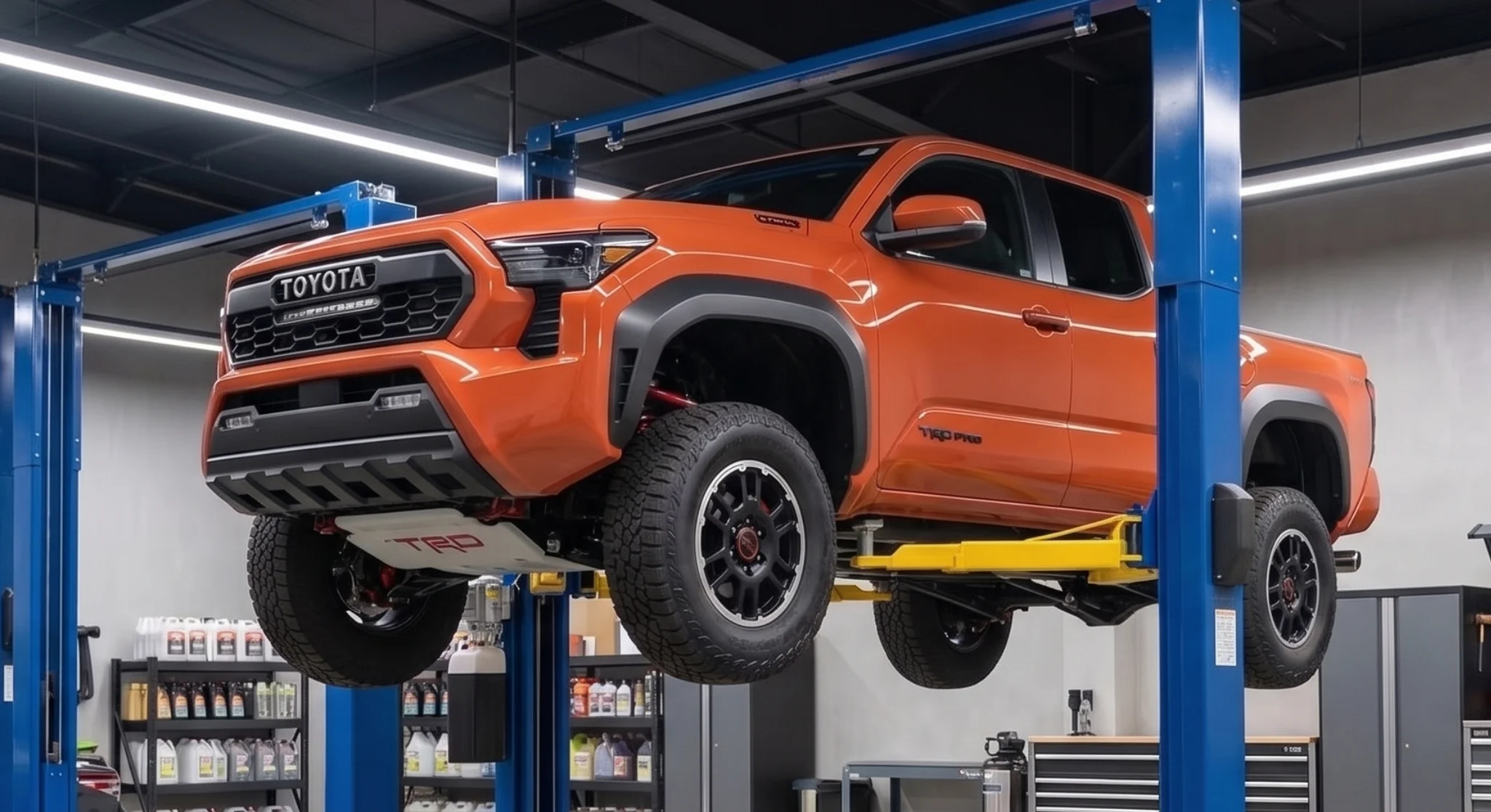
Reaching 60,000 miles is where ownership shifts from routine care into system-level preventative maintenance. Toyota vehicles are built to last, but preserving that dependability means going deeper at this interval — some factory warranty coverage is winding down, and components that have worked quietly for years begin showing natural wear. Everyday Southern California driving around Glendale, with its stop-and-go traffic, foothill grades, and summer heat, only adds to the thermal stress on your engine, brakes, and suspension.
Addressing these items at 60,000 miles keeps minor wear from compounding into expensive repairs, and keeps your steering, braking, and powertrain as responsive as the day you drove off the lot. If your odometer is approaching this checkpoint, the team at Toyota of Glendale is ready to help.
60,000-Mile Service at a Glance: Replaced vs. Inspected
The 60,000-mile service is a deliberate balance of two things: consumables with a predictable lifespan are replaced outright, while durable mechanical systems are tested to verify integrity. Here’s the quickest way to see what happens to your vehicle at this interval.
Replaced Outright
- Engine oil
- Oil filter
- Engine air filter
- Cabin air filter
- Spark plugs (engines due at 60K)
Inspected / Tested
- Brake pads, rotors, calipers, lines
- Steering gearbox, linkage, ball joints
- Drive-shaft boots
- Radiator, condenser, cooling hoses
- Drive belts (cracking, tension)
- Coolant level and condition
- Transmission for leaks and fluid condition
- Fuel lines and exhaust
- Driveline fluids (AWD models)
The Full Toyota 60,000-Mile Service Checklist
The 60,000-mile service is one of the most comprehensive intervals in the Toyota Scheduled Maintenance Guide. It bundles every item from the routine 5,000-mile visits with the added replacements and inspections that come due at 60K. Structurally, it mirrors the 30,000-mile service and adds spark plug replacement on engines scheduled for it. The checklist breaks into three groups.
Consumables Replaced at This Interval
- Engine oil and OEM oil filter
- Engine air filter
- Cabin air filter
- Spark plugs — on engines due at this interval
Rotations and Resets
- Four-tire rotation for even tread wear
- Tire pressures reset to factory specification
Multi-Point Inspection
- Brake pads, rotors, calipers, and lines
- Steering linkage, ball joints, and drive-shaft boots
- Drive belts (cracking, fraying, tension)
- Radiator, condenser, and cooling hoses
- Exhaust system and mountings
- Coolant, transmission, and fuel lines checked for leaks and condition
What About Fluids? Coolant, Brake, and Transmission at 60K
One of the most common misconceptions is that every fluid gets flushed at 60,000 miles. In reality, most Toyota fluids are inspected at this interval, and several aren’t due for replacement until well past it. Modern Toyotas ship with Genuine Toyota Super Long-Life Coolant, whose first replacement isn’t scheduled until 100,000 miles.
| Fluid | Typical Toyota Interval | Action at 60,000 Miles |
|---|---|---|
| Engine oil + filter | Every 5,000 mi (0W-20 synthetic: up to 10,000 mi) | Replaced |
| Engine coolant (Super Long-Life) | First change ~100,000 mi, then every 50,000 mi | Inspected — not typically due |
| Transmission fluid | Model-dependent; changed under load | Inspected; changed only if conditions warrant |
| Brake fluid | Condition-based; often serviced with brake work | Inspected |
| Driveline fluids (AWD) | Model-dependent | Inspected on AWD/4WD models |
Because coolant and several driveline fluids age by both time and mileage, your advisor evaluates condition rather than replacing on a fixed rule — which is why two vehicles at 60,000 miles can leave with different service lists.
Does Your Drivetrain Change the Service? FWD, AWD, and Hybrid
The core 60K checklist is the same across the lineup, but drivetrain adds specific items.
| Configuration | Additional 60,000-Mile Attention |
|---|---|
| Front-wheel drive | Base checklist — fewest added items |
| All-wheel drive / 4WD | Inspection of propeller shaft, transfer case, and differential fluids |
| Hybrid | Inverter cooling system check; hybrid battery cooling fan filter cleaned to prevent heat-related degradation |
Hybrid systems deserve special mention: servicing high-voltage battery cooling and inverter loops calls for factory-authorized procedures and Toyota diagnostic tools. Toyota covers the high-voltage hybrid battery for 10 years or 150,000 miles on 2020-and-newer vehicles, so keeping that system properly maintained protects a long-running warranty.
How Much Does a Toyota 60,000-Mile Service Cost — and What Affects the Price
The total depends on your specific model, drivetrain, and local labor rates. A front-wheel-drive sedan typically needs fewer fluid services and less labor than a larger all-wheel-drive truck or SUV, so cost tracks the complexity of the vehicle. Three factors move the estimate:
- Vehicle and drivetrain — more fluids and more inspection points on trucks, SUVs, and AWD/hybrid systems.
- Driving conditions — vehicles operated under Toyota’s “Special Operating Conditions” may need a brake fluid flush or transmission fluid exchange sooner.
- Findings — if the multi-point inspection reveals brake pads worn past safe limits or tires needing replacement, those safety corrections add to the baseline.
Our service advisors always provide a detailed, itemized estimate before any work begins. You can also review current offers on our service specials page.
Normal vs. Special Operating Conditions
Toyota’s maintenance guide splits driving into “normal” and “special operating conditions,” and the difference determines whether certain items come due earlier. Many everyday Los Angeles-area driving patterns push toward the special-conditions column.
| Normal Conditions | Special Operating Conditions |
|---|---|
| Steady freeway and around-town driving | Extended idling in heavy stop-and-go traffic |
| Consistent trips that let the engine fully warm | Repeated short trips, especially in the cold |
| Mild, stable climate | Sustained extreme heat |
| Paved roads | Dirt, gravel, or dusty roads |
| No trailer | Frequent towing or heavy loads |
If your driving leans toward the right-hand column, the shorter recommended intervals apply — and your advisor can help you determine which schedule fits.
Is Your Service Still Covered? ToyotaCare and Warranty
Whether the 60,000-mile service costs you anything depends on your coverage. ToyotaCare, standard on every new Toyota, covers factory-scheduled maintenance for the first 2 years or 25,000 miles — so by 60,000 miles most owners are past the complimentary window unless they hold an extended plan.
| Coverage | Duration | Covers |
|---|---|---|
| ToyotaCare (standard, new vehicles) | 2 years / 25,000 miles | Factory-scheduled maintenance + 24-hr roadside |
| ToyotaCare Plus (prepaid extension) | Up to 5 years / 75,000 miles | Extends factory-recommended service coverage + roadside |
| Hybrid battery warranty (2020+) | 10 years / 150,000 miles | High-voltage hybrid battery |
This information is provided for general educational purposes only and does not constitute legal advice. Warranty coverage depends on the specific terms of your vehicle’s warranty agreement. Consult your owner’s manual or a qualified legal professional for guidance on your individual situation.
Does Skipping Major Maintenance Affect Warranty and Resale
Neglecting your 60,000-mile service carries long-term consequences that fall into two categories — what it does to your warranty protection, and what it does to your vehicle’s value down the road.
Warranty Protection
Vehicle warranties generally require the owner to perform scheduled maintenance as outlined by the manufacturer. If a major component fails and you can’t document service at the recommended intervals, a manufacturer may deny the related claim. Keeping proof of each completed interval is what preserves your coverage if you ever need it.
Resale Value and Vehicle History
Skipped maintenance also marks your service history. Many dealerships and reputable service centers report visits to major vehicle-history databases, and a missing 60,000-mile checkpoint can read as a red flag to a future buyer — lowering market value.
| If You Skip the 60K Service | If You Stay on Schedule |
|---|---|
| Warranty claims may be denied without service records | Documented intervals preserve warranty protection |
| Gap in vehicle-history report signals neglect | Complete history reassures future buyers |
| Lower resale or trade-in value | Stronger resale and trade-in position |
| Small wear items compound into major repairs | Issues caught early, before they escalate |
Keeping your history complete is one of the simplest ways to protect your investment.
This information is provided for general educational purposes only and does not constitute legal advice. Warranty coverage depends on the specific terms of your vehicle’s warranty agreement. Consult your owner’s manual or a qualified legal professional for guidance on your individual situation.
Is Certified Dealership Service Worth It Over Independent Shops
When facing a major milestone, some drivers weigh an independent shop to save on labor. But the specialized engineering of modern Toyota vehicles means certified dealership service delivers meaningful value and protection.
- Model-specific training — our factory-trained technicians study the exact mechanical, electrical, and hybrid systems in the Toyota lineup, rather than servicing dozens of unrelated makes daily.
- Genuine OEM parts — engineered to your vehicle’s exact tolerances for performance and longevity, versus generic aftermarket parts built to fit multiple brands.
- Recalls and software — active manufacturer recalls and software updates are identified and addressed at no additional charge.
- Hybrid expertise — high-voltage battery cooling and inverter service requires factory-authorized procedures and Toyota diagnostic tools.
For more maintenance guidance, browse our service and parts tips or visit the service department homepage.
Quick Answers to Common Questions
Is transmission fluid changed during the 60,000-mile service?
For most modern Toyota models, transmission fluid is inspected for level and condition at 60,000 miles. A full replacement is generally needed at this interval only under heavy-load use — frequent towing, or dusty, mountainous driving.
Is my coolant replaced at 60,000 miles?
Usually not. Genuine Toyota Super Long-Life Coolant is scheduled for its first replacement around 100,000 miles, then every 50,000 miles after. At 60,000 miles it’s inspected for level and condition rather than replaced.
Are spark plugs always replaced at 60,000 miles?
It depends on your engine. Many modern Toyota engines use iridium spark plugs rated to roughly 120,000 miles, while certain engines are scheduled at 60,000 miles. Your Scheduled Maintenance Guide specifies the interval for your vehicle.
How long does the 60,000-mile service typically take?
A standard 60,000-mile service, including scheduled replacements and multi-point inspections, typically takes two to four hours. If technicians find additional wear items, your advisor will provide an updated time estimate.
What is the official Toyota Roadside Assistance number?
For an unexpected breakdown, flat tire, or roadside emergency, Toyota Roadside Assistance can be reached at 800-444-4195 for factory-backed support.
Can I perform the 60,000-mile service items myself?
Basic items like cabin and engine air filters can be done at home, but the comprehensive steering, braking, and fuel-system inspections and advanced fluid diagnostics require specialized equipment and professional expertise to ensure safety and preserve your coverage.
Schedule Your Toyota 60,000-Mile Service Today
Protecting the safety, efficiency, and resale value of your Toyota starts with staying on top of scheduled maintenance. If your odometer is closing in on 60,000 miles, don’t wait for a warning light. Our factory-trained technicians are ready to provide the precise care your vehicle deserves. To book your appointment or ask what your model requires, call our service team at 818-528-5070, or schedule online anytime.
Disclaimers
This information is provided for general educational purposes only and does not constitute legal advice. Warranty coverage depends on the specific terms of your vehicle’s warranty agreement. Consult your owner’s manual or a qualified legal professional for guidance on your individual situation.
Pricing and service estimates are provided for general informational purposes and are subject to change. Actual service costs depend on your specific vehicle, its condition, and required work; your service advisor provides an itemized estimate before any work begins. This content does not constitute financial, tax, or legal advice.